Featured articles are displayed here, which represent some of the best content on English Wikipedia.
Image 1
The Inaccessible Island rail, or Inaccessible rail (Laterallus rogersi), is a small bird species of the rail family, Rallidae. Endemic to Inaccessible Island in the Tristan Archipelago in the isolated south Atlantic, it is the smallest extant flightless bird in the world. The species was formally described by physician Percy Lowe in 1923 but had first come to the attention of scientists 50 years earlier. The Inaccessible Island rail's taxonomic affinities and origin were a long-standing mystery; in 2018 its closest relative was identified as the South American dot-winged crake, and it was decided that both species are best classified in the genus Laterallus. (Full article...)
Galerina marginata, known colloquially as funeral bell, deadly skullcap, autumn skullcap or deadly galerina, is a species of extremely poisonous mushroom-forming fungus in the family Hymenogastraceae of the order Agaricales. Before 2001, the species G. autumnalis, G. oregonensis, G. unicolor, and G. venenata were thought to be distinct from G. marginata due to differences in habitat and the viscidity of their caps, but phylogenetic analysis showed that they are all the same species. (Full article...)
Image 4
A quagga mare at the London Zoo in 1870, one of two specimens photographed alive
Titan, imaged by the Cassini orbiter, December 2011. A thick shroud of organic haze permanently obscures Titan's surface from viewing in visible light.
Titan is the largest moon of Saturn and the second-largest in the Solar System. It is the only moon known to have a dense atmosphere—denser than Earth's—and is the only known object in the Solar System besides Earth with clear evidence of stable bodies of surface liquid. Titan is one of seven gravitationally rounded moons of Saturn and the second-most distant among them. Frequently described as a planet-like moon, Titan is 48.16% larger in diameter than Earth's Moon and 80% more massive. It is the second-largest moon in the Solar System after Jupiter's Ganymede and is larger than Mercury; yet Titan is only 40% as massive as Mercury, because Mercury is mainly iron and rock while much of Titan is mostly ice, which is less dense. (Full article...)
Image 6
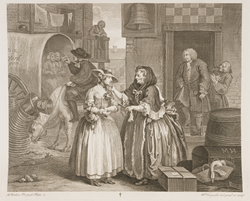
Elizabeth Needham (right foreground) as portrayed in William Hogarth's A Harlot's Progress Elizabeth Needham (died 3 May 1731), also known as Mother Needham, was an English procuress and brothel-keeper of 18th-century London, who has been identified as the bawd greeting Moll Hackabout in the first plate of William Hogarth's series of satirical etchings A Harlot's Progress. Although Needham was notorious in London at the time, little is recorded of her life, and no genuine portraits of her survive. (Full article...)
Computer–aided reconstruction of a rotavirus based on several electron micrographs
Rotaviruses are the most common cause of diarrhoeal disease among infants and young children. Nearly every child in the world is infected with a rotavirus at least once by the age of five. Immunity develops with each infection, so subsequent infections are less severe. Adults are rarely affected. (Full article...)
Image 9
Flocke on 9 April 2008, the day after her public debut
Flocke (German pronunciation:[ˈflɔkə]) is a female polar bear who was born in captivity at the Nuremberg Zoo in Nuremberg, Germany on 11 December 2007. A few weeks after her birth, she was removed from her mother's care after concerns were raised for her safety. Although the zoo had established a strict non-interference policy with its animals, officials chose to raise the cub by hand. This decision came at a time when the zoo was receiving negative attention from the media after another female polar bear reportedly ate her newly born cubs. (Full article...)
Image 10
Fairfax Harrison, taken before 1913
Reginald Fairfax Harrison (March 13, 1869 – February 2, 1938) was an American lawyer, businessman, and author. A son of the secretary to Confederate President Jefferson Davis, Harrison studied law at Yale University and Columbia University before becoming a lawyer for the Southern Railway Company in 1896. By 1906, he was Southern's vice-president of finance, and in 1907, he helped secure funding to keep the company solvent. In 1913, he was elected president of Southern, where he instituted a number of reforms in the way the company operated. (Full article...)
Nemegtomaia is a genus of oviraptoriddinosaur from what is now Mongolia that lived in the Late CretaceousPeriod, about 72 to 70million years ago. The first specimen was found in 1996, and became the basis of the new genus and species N. barsboldi in 2004. The original genus name was Nemegtia, but this was changed to Nemegtomaia in 2005, as the former name was preoccupied. The first part of the generic name refers to the Nemegt Basin, where the animal was found, and the second part means "good mother", in reference to the fact that oviraptorids are known to have brooded their eggs. The specific name honours the palaeontologist Rinchen Barsbold. Two more specimens were found in 2007, one of which was found on top of a nest with eggs, but the dinosaur had received its genus name before it was found associated with eggs. (Full article...)
Image 15
The white-eyed river martin (Pseudochelidon sirintarae) is a passerinebird, one of only two members of the river martin subfamily of the swallows. Since it has significant differences from its closest relative, the African river martin, it is sometimes placed in its own genus, Eurochelidon. First found in 1968, it is known only from a single wintering site in Thailand, and may be extinct, since it has not been seen since 1980 despite targeted surveys in Thailand and neighbouring Cambodia. It may possibly still breed in China or Southeast Asia, but a Chinese painting initially thought to depict this species was later reassessed as showing pratincoles. (Full article...)
Writing is the act of creating a persistent, usually visual representation of language on a surface. As a structured system of communication, writing is also known as written language. Historically, written languages have emerged as a way to record corresponding spoken languages. While the use of language is universal across human societies, most spoken languages are not written. A particular set of symbols, called a script, as well as the rules by which they encode a particular spoken language, is known as a writing system. In some rare cases, writing may be tactile rather than visual. (Full article...)
... that according to the author of a key textbook on documentary editing, a bookstore erroneously assumed that it was related to documentary films instead of archival science?
... that the 1998 cyberpunk short story "CyberJoly Drim" caused a controversy in the Polish science fiction and fantasy community?
... that Australian Madeleine Steere played water polo professionally in Turkey after studying biomolecular science in the United States?
Get involved
For editor resources and to collaborate with other editors on improving Wikipedia's Science-related articles, visit WikiProject Science.
This portal needs to be updated. Please help update this portal to reflect recent events or newly available information. Relevant discussion may be found on the talk page.
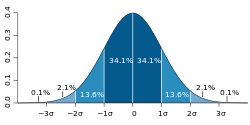
Many naturally occurring phenomena approximate a normal distribution.
Complete requests of other editors on the talk pages of science-related articles (examples)
Expand 2026 in science and/or other articles for science-related topics of the year (in the box on the right)
Create new articles for items of this article, mostly articles relating to new scientific fields/topics/findings (the page does not use redlinks anymore but you will quickly identify possible new articles when reading it; here you can find a version with over 60 redlinked examples)
Some of the lists' items have not yet been integrated into their wikilinked articles; if you add a study there it should also be relevant to at least one other article
Find studies published under a compatible open license (like CC BY 4.0) and upload the studies' images with descriptions from the study and add these images to articles if they are relevant and useful there
When a study with a useful image is published under an incompatible or unclear license (or the image is published not in a study but elsewhere), you could contact its authors (Twitter/Mail) and ask them to give you the permission to upload them under CC BY 4.0 (or whether they could upload the image/s under a compatible license)
You can also think about whether images would be useful as you read a science-related article and then search for such images:
if they already exist add them (if already on WMCommons) or upload them (if the license is ok) or ask their authors for permissions
Sci-Hub is a shadow library that provides free access to millions of research papers, regardless of copyright, by bypassing publishers' paywalls in various ways. Unlike Library Genesis, it does not provide access to books. Sci-Hub was founded in Kazakhstan by Alexandra Elbakyan in 2011, in response to the rising costs of research papers behind paywalls. The site is extensively used worldwide. In September 2019, the site's operator(s) said that it served approximately 400,000 requests per day. In addition to its intensive use, Sci-Hub stands out among other shadow libraries because of its easy use and reliability, as well as the enormous size of its collection. A 2018 study estimated that Sci-Hub provided access to almost all scholarly publications. On 15 July 2022, Sci-Hub reported that its collection comprised 88,343,822 files. In December 2020, the site paused uploads due to legal troubles. Since then, the site has archived a much lower fraction of new articles. (Full article...)
In biology, taxonomy (from Ancient Greekτάξις (taxis)'arrangement' and -νομία (-nomia)'method') is the scientific study of naming, defining (circumscribing) and classifying groups of biological organisms based on shared characteristics. Modern approaches prioritize common ancestory and evolutionary relationships. Organisms are grouped into taxa (singular: taxon), and these groups are given a taxonomic rank; groups of a given rank can be aggregated to form a more inclusive group of higher rank, thus creating a taxonomic hierarchy. The principal ranks in modern use are domain, kingdom, phylum (division is sometimes used in botany in place of phylum), class, order, family, genus, and species. The Swedish botanist Carl Linnaeus is regarded as the founder of the current system of taxonomy, having developed a ranked system known as Linnaean taxonomy for categorizing organisms. (Full article...)
A plot of normal distribution (or bell-shaped curve) where each band has a width of 1 standard deviation–See also: 68–95–99.7 rule. In statistics, the standard deviation is a measure of the amount of variation of the values of a variable about its (arithmetic) average. A low standard deviation indicates that the values of a set tend to be close to their average, while a high standard deviation indicates that the values are spread out over a wider range. Standard deviation may be abbreviated SD or std dev, and is most commonly represented in mathematical texts and equations by the lowercase Greek letterσ (sigma). (Full article...)


 Featured articles are displayed here, which represent some of the best content on English Wikipedia.
.jpg/250px-Inaccessible_Island_Rail_(Atlantisia_rogersi).jpg)




.jpg)


 Simulation of liquids with different viscosities, by Synapticrelay (from Wikipedia:Featured pictures/Sciences/Others)
 A patient being treated for COVID-19, by Gustavo Basso (from Wikipedia:Featured pictures/Sciences/Others)

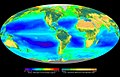 Global oceanic and terrestrial photoautotroph abundance at Primary production, by SeaWiFS Project (from Wikipedia:Featured pictures/Sciences/Others)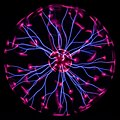

_-_Climate_Lab_Book_(Ed_Hawkins).png/120px-20181204_Warming_stripes_(global%2C_WMO%2C_1850-2018)_-_Climate_Lab_Book_(Ed_Hawkins).png)


 Section of the Large Hadron Collider, by Maximilien Brice (from Wikipedia:Featured pictures/Sciences/Others)
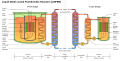
 Archaeological excavation at Atapuerca Mountains, by Mario modesto (from Wikipedia:Featured pictures/Sciences/Others)

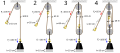 Mechanical advantage device, by Prolineserver (edited by Tomia, Ss181292 and Atropos235) (from Wikipedia:Featured pictures/Sciences/Others)
 Toroid magnets of the ATLAS detector, by Maximilien Brice, CERN (edited by Bammesk) (from Wikipedia:Featured pictures/Sciences/Others)
 Drop impact on a liquid surface, by José Manuel Suárez (from Wikipedia:Featured pictures/Sciences/Others)
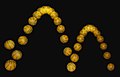 Projectile motion of a bouncing ball at Inelastic collision, by MichaelMaggs (from Wikipedia:Featured pictures/Sciences/Others)
.png/120px-Diamond_(side_view).png) Color cathodoluminescence of a diamond, by Pavel.Somov (from Wikipedia:Featured pictures/Sciences/Others)
Color cathodoluminescence of a diamond, by Pavel.Somov (from Wikipedia:Featured pictures/Sciences/Others)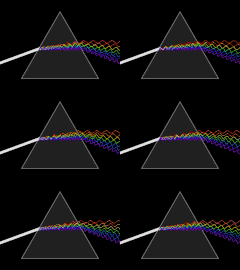
 Peruvian Andes at United States Exploring Expedition, by Alfred Thomas Agate (edited by Durova) (from Wikipedia:Featured pictures/Sciences/Others)
.jpg/120px-Shockwave_pattern_around_a_T-38C_observed_with_Background-Oriented_Schlieren_photography_(1).jpg)
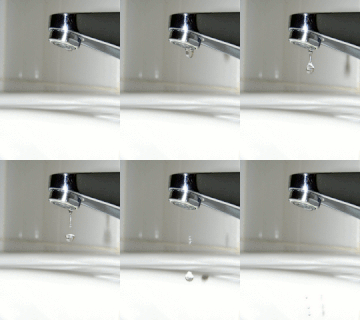 Animation of a water drop, by Chris 73 and Gmaxwell (from Wikipedia:Featured pictures/Sciences/Others)
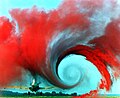 NASA study on wingtip vortices at Wake turbulence, by Langley Research Center (edited by Fir0002) (from Wikipedia:Featured pictures/Sciences/Others)
 Vibrating glass beam at Euler–Bernoulli beam theory, by Ben pcc (from Wikipedia:Featured pictures/Sciences/Others)
 Parallax, by Mila Zinkova (edited by Richard Bartz) (from Wikipedia:Featured pictures/Sciences/Others)
 Translational motion at Thermodynamic temperature, by Greg L (from Wikipedia:Featured pictures/Sciences/Others)
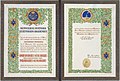 Nobel Prize in Physics diploma, by Sofia Gisberg (restored by Jebulon) (from Wikipedia:Featured pictures/Sciences/Others)
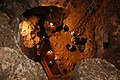 Archaeologists prospecting Santa Ana Cave at Excavation (archaeology), by Mario modesto (from Wikipedia:Featured pictures/Sciences/Others)


_-_Climate_Lab_Book_(Ed_Hawkins).png)


.png)


.jpg)


 Vital articles to understand Science.


.svg/40px-Earth_symbol_(bold).svg.png)
.svg/20px-Globus_cruciger_(bold).svg.png)
.svg/250px-Mickey_Mouse_(poster_version).svg.png)


.svg)
.svg)
.svg)


